
The Investigator’s Search for a Motive
Towards ZeroBattle moves from financial explanations to the psychological structure of a crime designed to punish rather than profit.
increasing Bearing strength in each event
 decreasing
Bearing strength in each eventdecreasingThe First Financial Question
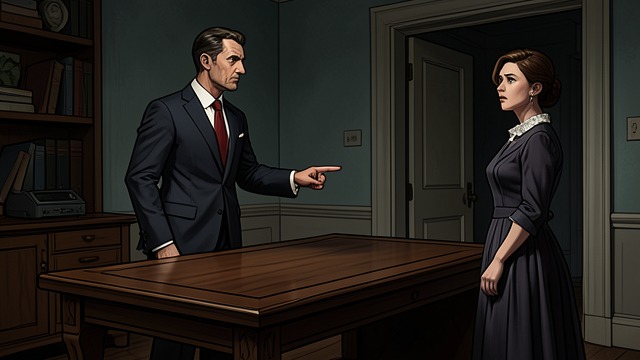
Who Benefits?
The standard inquiry
Battle asks who inherits Lady Tressilian’s money. Nevile identifies the large trust that will pass to him and the wife named in Sir Matthew’s will.
The question is necessary: money often motivates murder, and the household contains people who may receive something.
A hypothesis, not an answer
Battle treats financial gain as one possible explanation among several. The inquiry must still account for the scene, the weapon, and the timing.
The Bank Check

Need Is Tested
Nevile’s account
Nevile claims that he is financially secure and does not need the inheritance. Leach confirms that his bank balance and investments are favourable.
Battle leaves open the possibility of hidden debts or blackmail, but has no evidence for either. The check weakens the most straightforward motive without clearing Nevile.
Motive becomes more complex
The case cannot be solved by pointing at the largest sum. Battle begins to consider motives driven by relationships and character rather than money.
The Beneficiaries Multiplied
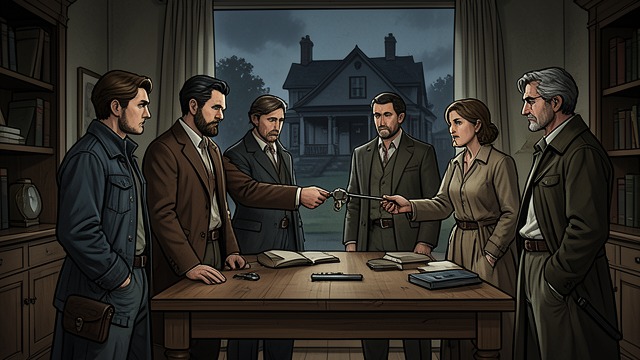
Everyone Has a Possible Stake
A crowded list
The will gives Battle reason to consider Nevile, Audrey, Mary, Barrett, and Hurstall. Kay mistakenly believes that she will also share in the inheritance.
The possible beneficiaries span different relationships and financial circumstances. Each possibility must be compared with access and behaviour.
The danger of a simple theory
The many potential gains make inheritance a poor guide by itself. A monetary motive can be true in principle and still fail to explain the particular crime.
A Kink in the Case

A Psychological Motive
Obsession replaces greed
Battle begins to suspect someone driven by a fixed idea rather than an ordinary advantage. Treves’s story about a child murderer suggests that careful violence may persist beneath a normal exterior.
Mary’s account of Treves’s strange death adds the possibility that the killer has acted to silence a witness.
Hatred takes shape
The evidence begins to describe a person willing to plan several crimes for one emotional purpose. The central question becomes not who gains money but who wants Audrey punished.
The Punishment Revealed
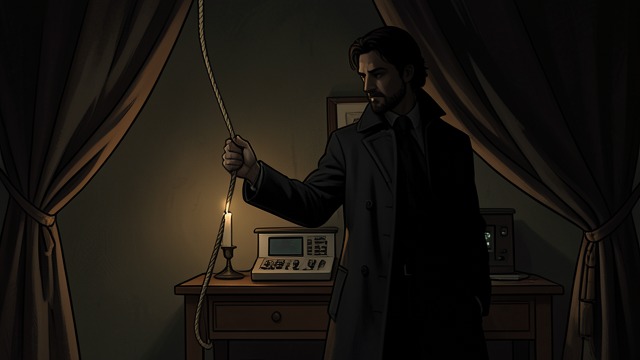
The Motive Beneath the Case
Revenge beyond proportion
Nevile admits that Audrey’s departure wounded his pride and that he wants her hanged. He has turned rejection into a private sentence of death.
The plan requires Lady Tressilian’s killing, two false trails, and the manipulation of legal appearances. Its scale is disproportionate because it serves an obsession rather than a practical need.
The case finally coheres
The financial facts, the childhood story, the false alibi, and the staged clues now fit a single psychological purpose. Battle’s search for motive ends with hatred, not inheritance.
September 13, at the murder scene
September 13, during Nevile’s questioning
September 13, after both wills are discussed
September 13, after Battle hears about Treves’s story
Near the ending, during Nevile’s confession
